EAA vs BCAA: What's the Difference & Which Should You Take?
BCAAs and EAAs both support training and recovery, but they're not the same thing. Here's the real difference between EAA and BCAA supplements.
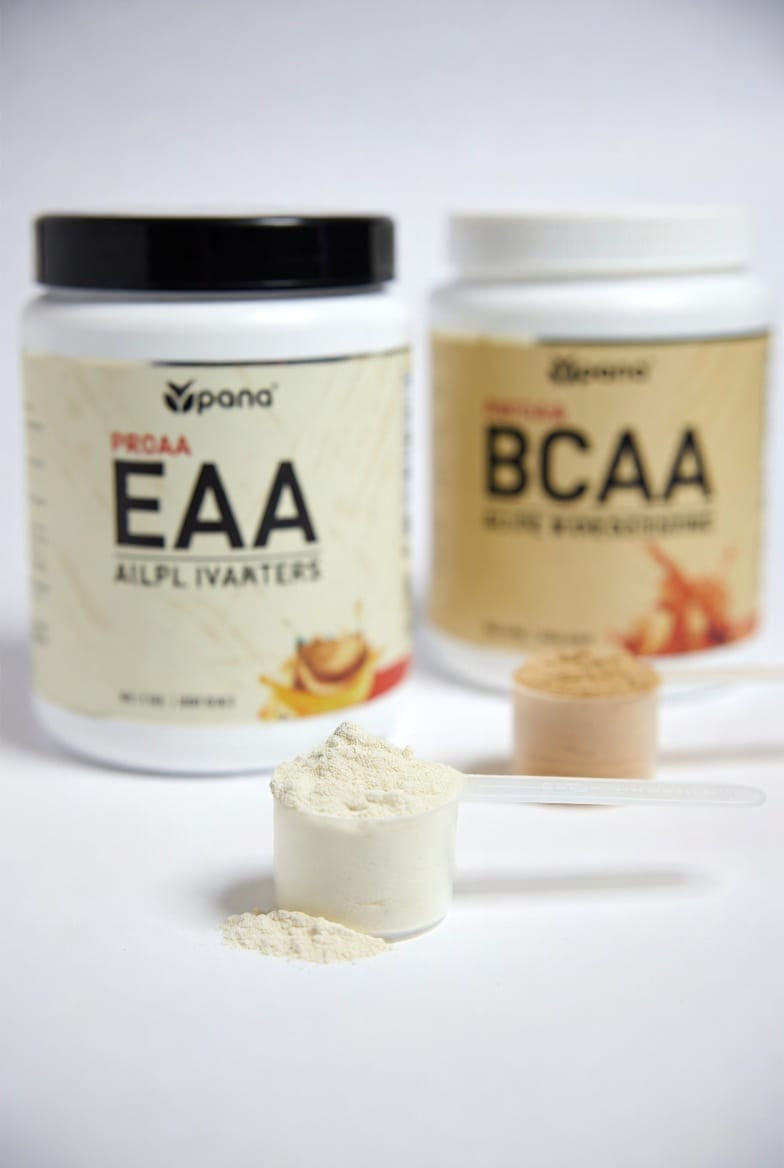
If you've stood in front of the amino acid shelf wondering whether to grab BCAAs or EAAs, you're not alone — the names sound similar, and both get marketed around "muscle recovery." Here's what actually separates them.
What Are BCAAs?
BCAA stands for Branched-Chain Amino Acids — specifically three of them: leucine, isoleucine and valine. These three are singled out because leucine in particular plays a key role in triggering muscle protein synthesis, the process your body uses to repair and build muscle tissue after training.
What Are EAAs?
EAA stands for Essential Amino Acids — all nine amino acids your body cannot produce on its own and must get from food or supplements. That includes the three BCAAs (leucine, isoleucine, valine) plus six more: lysine, methionine, phenylalanine, threonine, tryptophan and histidine.
In short: every BCAA is an EAA, but not every EAA is a BCAA. EAA supplements simply provide a more complete amino acid profile.
EAA vs BCAA: The Difference at a Glance
| BCAA | EAA | |
|---|---|---|
| Amino acids included | 3 (leucine, isoleucine, valine) | All 9 essential aminos (includes the 3 BCAAs) |
| Complete profile for muscle protein synthesis | No — only the 3 branched-chain aminos | Yes — supplies every essential amino acid |
| Key role | Leucine helps trigger muscle protein synthesis | Provides the full set of building blocks the process needs |
| Typical price | Usually lower | Usually a little higher |
| Best for | Extra leucine on an already protein-sufficient diet | A more complete top-up, fasted training, or lower-protein days |
| Redundant if you already have… | A daily whey/complete-protein shake | A daily whey/complete-protein shake |
EAA vs BCAA: Which Supports Muscle Protein Synthesis Better?
Muscle protein synthesis needs all nine essential amino acids available at once to fully proceed — not just the three BCAAs. This is the main argument in favour of EAAs: a BCAA-only product can supply plenty of leucine to trigger the process, but if your diet is short on the other six essentials at that moment, the process may be limited by what's missing. A complete EAA blend (or a complete protein source like whey) avoids that gap entirely.
Do You Need Either If You Already Eat Enough Protein?
This is the detail most marketing skips. If you're already meeting your daily protein target from whole foods and/or a complete protein powder like whey, you're already getting a full spread of essential amino acids — and the additional benefit of BCAA or EAA supplements on top may be limited. They're most useful as a convenient, fast-absorbing option around training, particularly if you train fasted or are eating in a calorie deficit.
So, EAA or BCAA?
- Choose EAAs if: you want the most complete amino acid profile and don't mind paying slightly more.
- Choose BCAAs if: you specifically want extra leucine alongside a diet that's already protein-sufficient, often at a lower price point.
- Already drinking a whey shake daily? You're likely covered — consider EAAs/BCAAs as a fasted-training or hot-weather hydration add-on rather than a must-have.
Frequently Asked Questions
Can I take EAAs and BCAAs together?
There's little reason to — an EAA product already contains the three BCAAs, so stacking both is usually unnecessary.
When should I take EAAs or BCAAs?
Commonly before, during or after training. Follow the directions on your product's label for serving size.
Are EAA/BCAA supplements a substitute for protein powder?
No — they're a convenient top-up, not a replacement for meeting your overall daily protein target.
This article is general in nature, not medical advice, and complies with the TGA Therapeutic Goods Advertising Code. Always read the product label and consult a healthcare professional about your individual nutrition needs.